Four Undergraduates Reflect on the Importance of Labor Education in California Schools
By: Skye, Isabel, Sarai, Elena
During UCLA’s Spring 2026 quarter, four undergraduates had the opportunity to intern with the UCLA Labor Center’s Young Worker Initiative (YWI) and the Young Workers Education Project (YWEP)—projects educating students across Los Angeles County about their workplace rights. Invited into classrooms by teachers from a broad range of LA County public schools, these initiatives, led by Dr. Janna Shadduck-Hernández and Project Director Nicolle Fefferman, conduct modules and simulations that teach middle school, high school and college students how unions work, what laws protect workers, and what power workers have to win better conditions.
Throughout their three month internship, the students helped facilitate several classroom learning experiences: the AB-800 Workplace Readiness module educates students about their legal rights as young workers; the Collective Bargaining simulation provides hands-on learning for students to roleplay union and management bargaining committees negotiating a union contract; the Orange Computers simulation lets students act as stakeholders negotiating the conditions at a computer manufacturing company to decide on labor policy; and the StarCups union drive simulation, which created opportunities for students to roleplay as managers, workers and customers in deliberating on whether a local café should unionize. Each student understood the significance of these curricula through their own diverse backgrounds and different work experiences in high school.
Skye | Labor Studies and Education & Social Transformation | Class of 2028
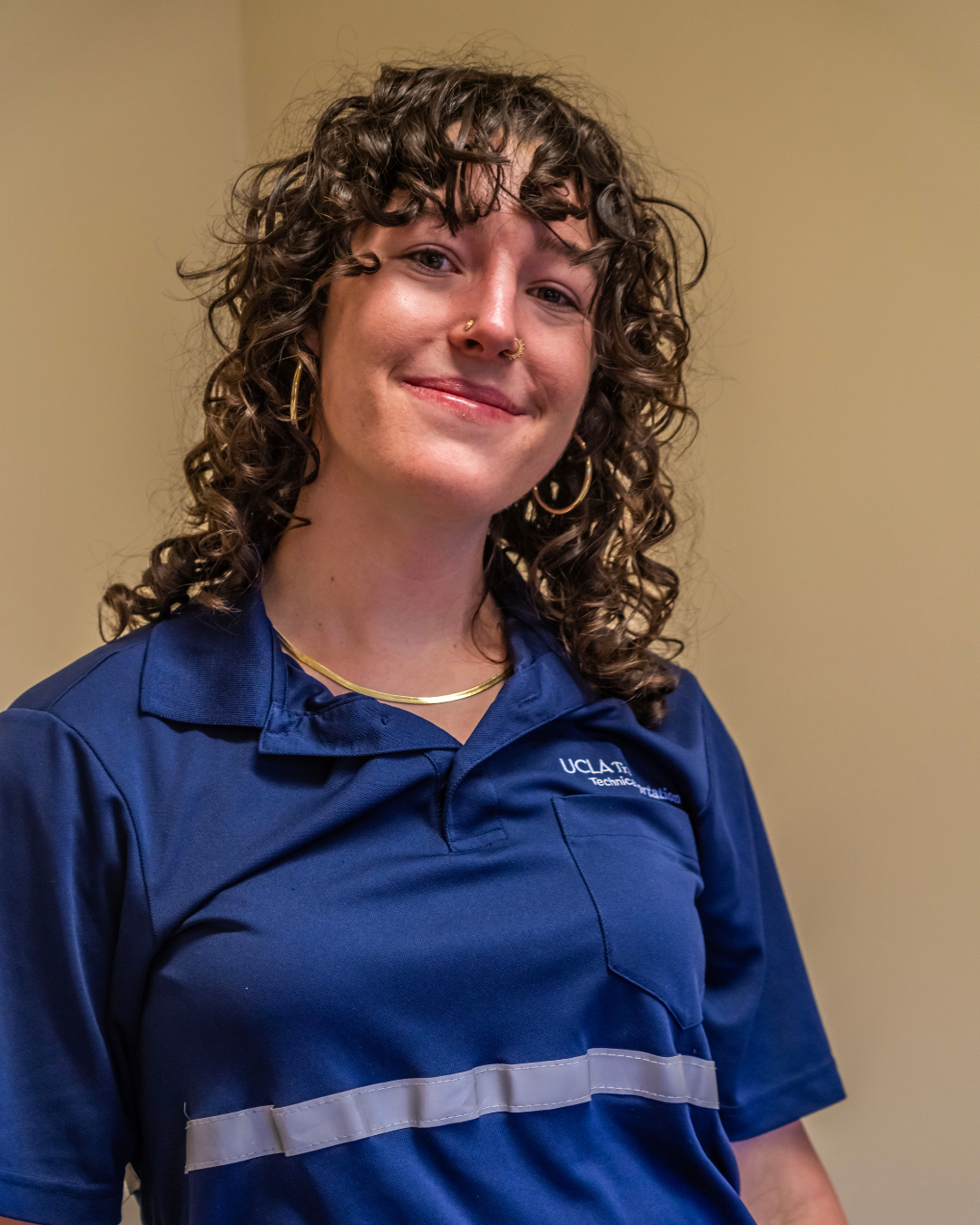
My name is Skye, and I’m a third-year Labor Studies and Education & Social Transformation major from Denver, Colorado. I got involved with the YWEP through my Labor Studies/Education M136 class with Professor Janna Shadduck-Hernández, which explored how working families interact with public education. As our field work requirement for the class, we were asked to travel to an LAUSD school and help YWEP conduct an AB 800 workplace readiness module for a class of middle or high school students. So on one early February morning, I woke up at 6 a.m., jumped in my beat-up 2009 Honda Accord, and set up the 405 towards Tarzana’s Portola Middle School.
As I helped Portola students navigate the module—which taught them about the laws California has in place to protect young workers, including break requirements, minimum wage policies, and health & safety regulations—I fell in love with the work. Four months and a couple of hundred dollars’ worth of gas later, I’ve been inside almost a dozen classrooms from San Pedro to Glendale, South Central to Chatsworth. In many of those schools, I’ve co-facilitated workplace rights modules like the one I first witnessed at Portola. But I’ve also had the chance to assist in the YWEP’s labor simulations, where students role play different stakeholders as they bargain for a union contract, discuss a company’s labor policy or organize a local coffee shop. In every exercise, I watched students’ faces light up when they learned what a union was, their mouths fold into mischievous grins upon realizing workers had the power to strike. By the end, even the students who started the day with their heads in their arms were itching to hoist a picket sign.
There are many reasons I find this work to be so satisfying. Perhaps the greatest among them is how much I see my younger self in the students YWEP teaches. Like many of them, I worked in high school. The exhilaration they felt participating in YWEP’s simulations was the same I felt when I first joined my union, CWA-TNG Local 37074, in my senior year. And the lessons they learned through YWEP’s simulations were the very same I learned as I became enmeshed in my union.
Maybe the most essential lesson that YWEP imparts is one that took me—and many other union workers—ages to learn: what it means to be an active participant in your union. With many of the students I met planning to go into a highly unionized profession—like nursing or firefighting—this is vital. After all, many new union members get stuck seeing their union as little more than a monthly newsletter and a paycheck deduction. While the patient guidance of my union siblings helped me avoid such a mindset, that is not a universal experience. Luckily. the students who participated in YWEP’s labor simulations will have a comprehensive blueprint for union engagement to look back on. The students who role-played as a union bargaining committee member in the Collective Bargaining Simulation will enter their workplaces understanding the necessity of winning a strong contract. They will stay informed about negotiations and participate in workplace actions demanding a fair deal. They will keep their eyes on the bargaining committee, ensuring members carry forward the union’s demands with the same passion that they did in high school. They may even serve on it themselves!
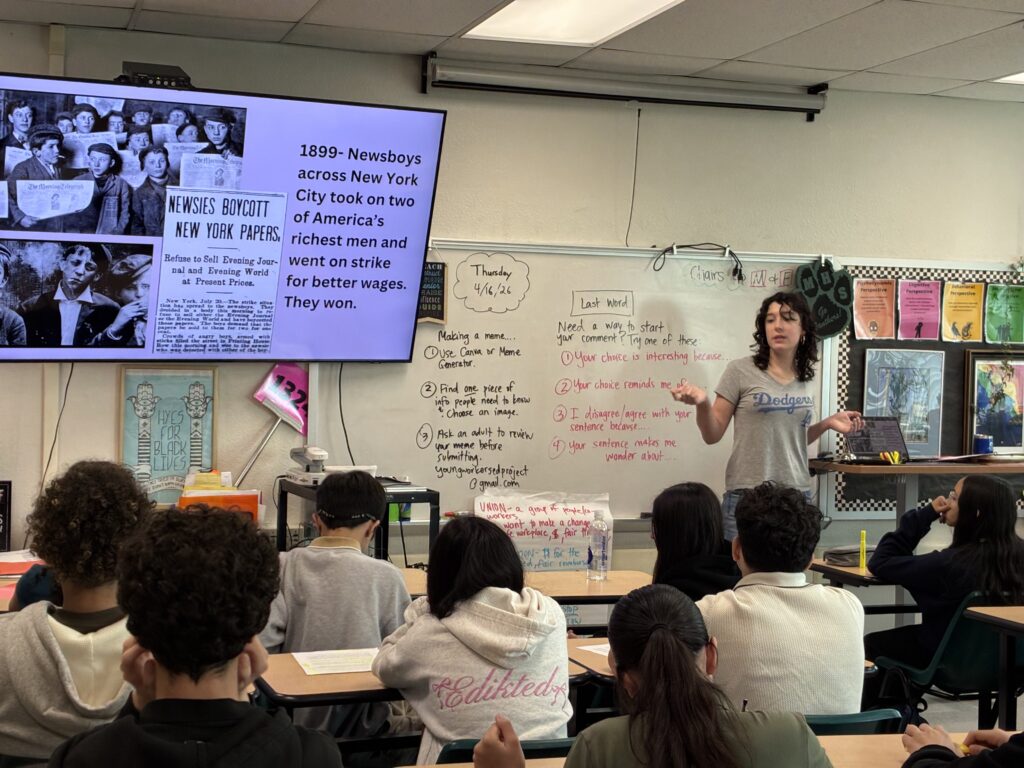
And this is more than my optimistic guess—dozens of students I worked with left the classroom with a commitment to be involved in their future unions. One student at San Pedro High School who planned to study nursing promised to become involved in her union as soon as she began work, explaining how the collective bargaining simulation had shown her how challenging working conditions in healthcare could be. A student at Cleveland High School who wanted to become an LAFD firefighter nodded his head thoughtfully when I suggested he could one day be a union steward. Some didn’t even have to wait. At another school, I heard a student—a city lifeguard and member of SEIU 721—discussing his working conditions. A sheet of broken fiberglass had been left at the pool for nearly a week, putting both workers and poolgoers at risk of injury. When he left the auditorium, he did so with a plan to contact his union steward and file an OSHA complaint, ensuring that he and his coworkers got the safe workplace they deserved.
Next year, the Young Workers Education Project and the Young Workers Initiative will look very different, as its beloved director returns to classroom teaching and the UCLA Labor Center strategizes about how to best reinforce its school-to-movement pipeline. Both initiatives, further, require funding and support from school districts and departments of education if they are to be sustained long-term. In my time with YWEP, I witnessed a curriculum that made lifelong changes in the students we worked with. I’m convinced that because of our dozens of modules and simulations, hundreds of LAUSD students who may have otherwise been disengaged will be resolved to join their unions, pay their dues, and fight for a dignified workplace. It is our duty to make sure that this work continues in public schools across California, ensuring that generations of students have the same revelations—and develop the same commitment to action—as those I had the honor to meet.
Isabel | Sociology and Education & Social Transformation | Class of 2026

My name is Isabel, and I am a recently graduated transfer student who studied Sociology and Education & Social Transformation at UCLA. I first heard about the Young Workers Education Project through Labor Studies/Education M136: Working Families and Educational Inequities in Urban Schools, a class taught by Professor Janna Shadduck-Hernández. Initially, I approached the class as another requirement for graduation. But once I learned about the UCLA Labor Center’s Young Worker Initiative and the Young Workers Education Project, I became passionate about their hands-on approach to helping younger generations understand their and their loved ones’ workplace rights. While I did not start working until community college, the vast array of jobs I have held left me in situations wondering: what are my rights?
Before participating in YWEP, my first job in community college was educating Latino students, primarily Dreamers and first-generation students, about their educational rights. Being a part of YWEP and working alongside Director Nicolle Fefferman, Professor Shadduck-Hernández, and fellow UCLA students has led me to look back at my experiences teaching students in a new light, reaffirming my goal to be a K-12 counselor. During YWEP workshops, I watched many students gradually transform from being disengaged to fully invested by the end of each day. Their enthusiasm for learning about their workplace rights and how to apply them in current and future jobs was incredibly inspiring. Witnessing their energy reminded me of the impact that education and research have in empowering communities. It further allowed me to think about how I can apply labor education towards my own personal goals and reignited my old passion for research.
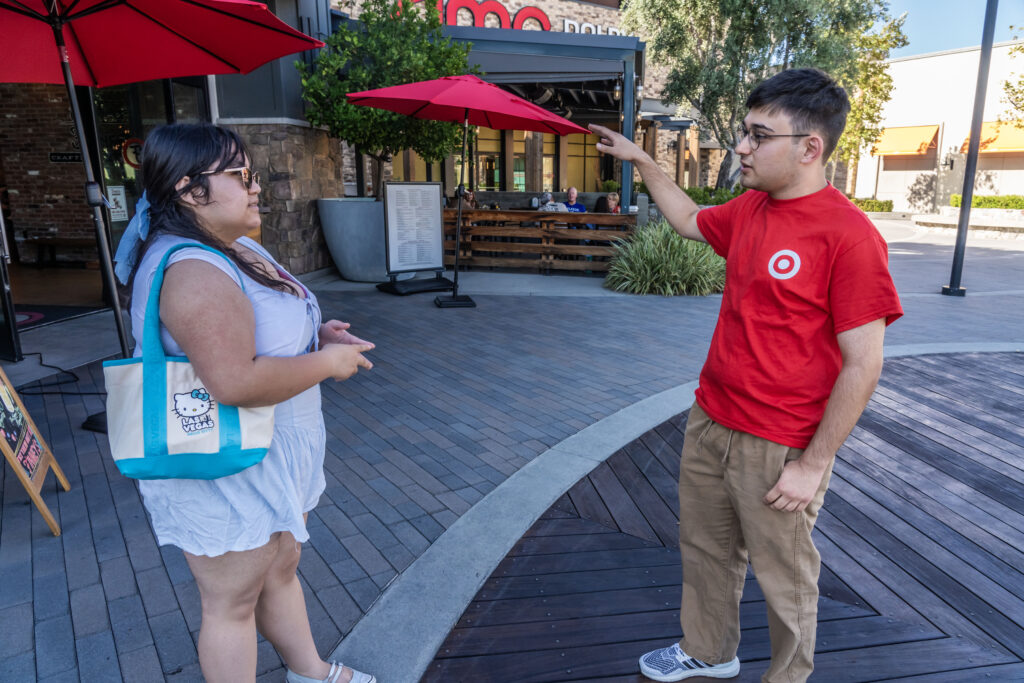
One experience that stood out to me in specific was our visit to Clark Magnet High School in Glendale, California. The visit felt like a full-circle moment, as it was my high school and the same place I had previously returned to teach workshops about community college opportunities while I was in community college. While co-facilitating an AB-800 module there, I noticed many students connected their rights to ongoing issues within their community and to experiences they or their families had faced. As the discussion unfolded, students began engaging with one another, bonding over their shared experiences and a desire to prepare themselves for their future jobs. Seeing students rely on each other to digest and understand their workplace rights is what made my time with YWEP feel so worthwhile. After all, to educate is to build community. By equipping young people and our local communities with an understanding of their rights, we strengthen their ability to advocate for themselves and others in the workplace—and put them one step closer to a better future.
Sarai | Economics and Labor Studies | Class of 2027
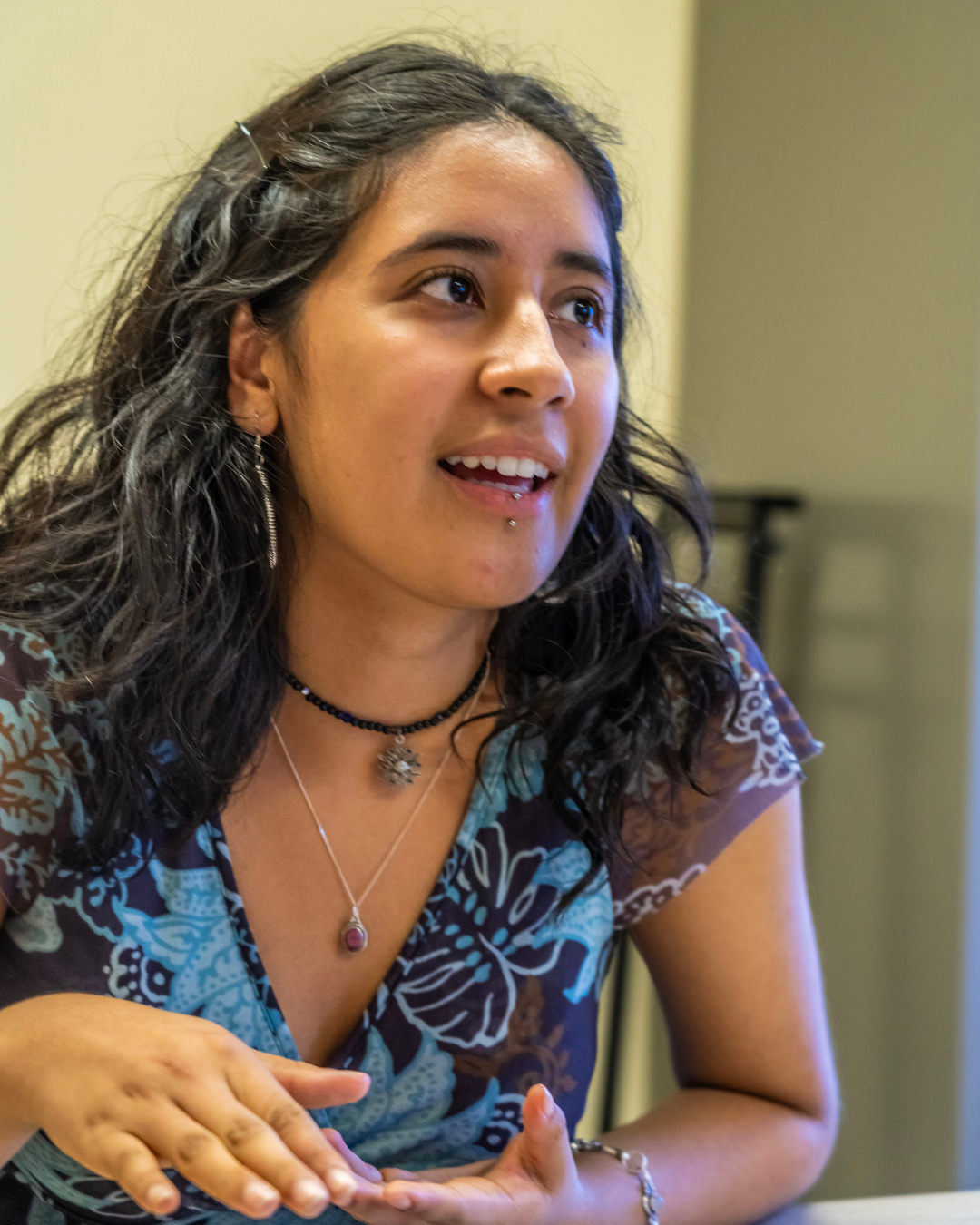
Like my peers Skye and Isabel, my introduction to YWEP was through Professor Janna Shadduck-Hernández’s Labor Studies/Education M136 class. I remember the excitement and nervousness of walking into my first classroom not knowing what to expect, contemplating if I was ready to help students understand their rights as workers. That initial excitement never truly wore off. Every time I walked into a new classroom, I would leave amazed by how much students already knew from their own and their families’ work experiences and how applicable this information was to them.
Being part of YWEP alongside Project Director Nicolle Fefferman and my fellow UCLA students has reaffirmed for me the critical role labor education can play for the future generation of workers. From listening in on lively conversations between students and their peers on workplace issues, to watching them intertwine economic theory with labor rights, to seeing them negotiate union contracts, it has served as a reminder of the importance of facilitating spaces for students to reflect on the realities of different workplaces.
Most memorably, while co-facilitating a Collective Bargaining Simulation at San Pedro High School, I saw students transform their agitation at management’s counteroffers into powerful arguments that granted them important concessions for union members. Across our different workshops and modules in the YWEP, I consistently saw how engaged students were, regardless of their previous understanding of labor rights.
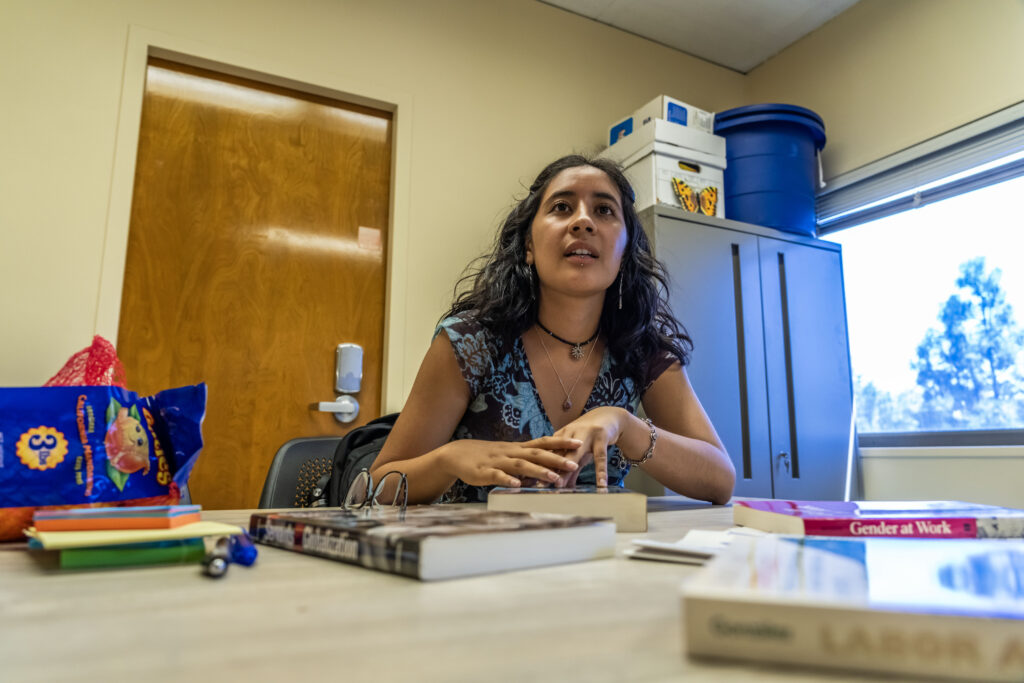
As a former LAUSD and Downey Unified School District student, I was amazed that students were being taught this curriculum, as I was never formally taught my rights as a worker until I became a Labor Studies major at UCLA. I, like many high school students looking to become more financially independent, got my first job at a local credit union near my high school. I remember thinking how fortunate I was to have found a job that provided me with flexible working hours and a position that took into consideration the demands of being a high school student. It was also my first introduction to workplace regulations, as my employer required me to obtain a work permit from my school before I could begin working.
Despite my luck, I also saw the reality of other working high school students who did not get the same opportunity, like my friend who started working at a fast-food restaurant to support her family. I saw how her long working hours started to reflect in her school absences and disengagement from her classes. At the time, I recognized that her experience was unfair, but again, I did not realize there were labor laws and supposed school counselors dedicated to protect young workers from situations like these.
My introduction into the world of labor studies happened during my second year at UCLA as an economics major. For the first time in my education journey, I felt that my lived experiences as a first-generation Latina from Southeast Los Angeles were being represented in the classroom.
Having the stories and conditions of the working class centered in our discussions inspired me to question how I could utilize my economics background in tandem with labor studies to give those vulnerable under our labor system a future of economic stability and worker dignity.
Through the UCLA Labor Center Young Worker Initiative and YWEP, I hope students feel that same empowerment I have felt to continue fighting as workers and as students for a just workplace environment.
Elena | Political Science and Labor Studies | Class of 2026
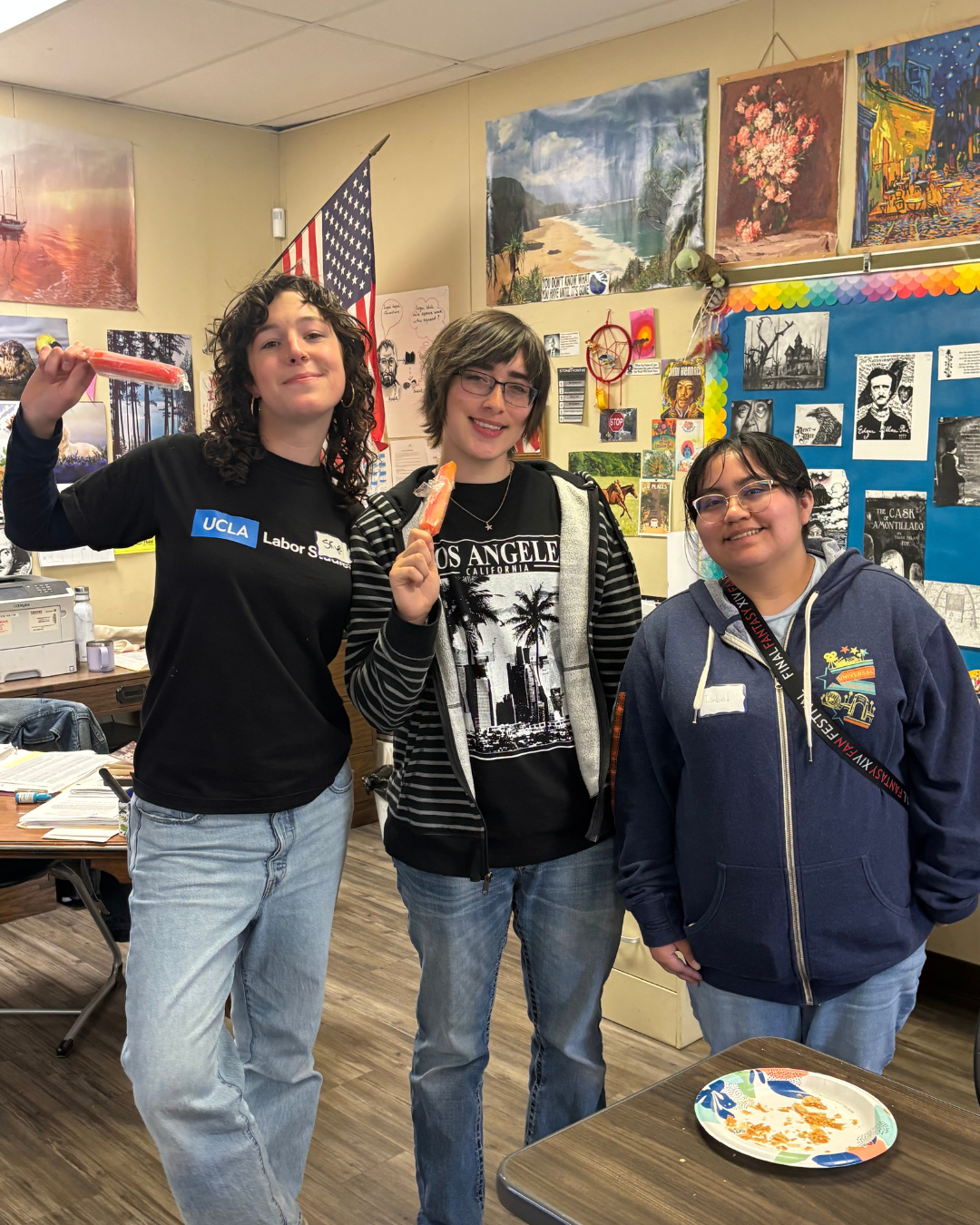
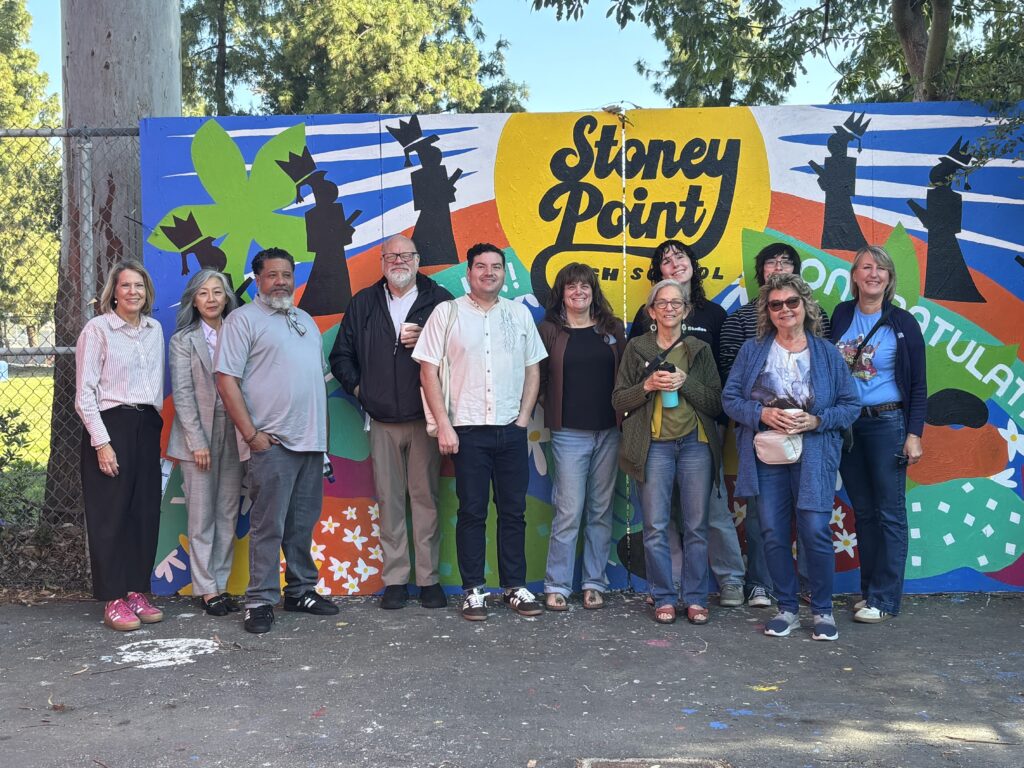
My name is Elena, and I’m a recently graduated transfer student who studied Political Science and Labor Studies at UCLA. Although I only joined the Young Workers Education Project (YWEP) in April, each school visit I’ve done since then—at Jefferson, John Marshall, San Pedro, Stoney Point, and many other schools—has opened my eyes in unexpected ways. Whether I was watching students roleplay as union members and their management to bargain the first contract of their lives, or listening as they shared their first-time working experiences with me, I could not help but reflect on my own work history. My first job, like many of theirs, started when I was 16. I lived in Texas, a “right-to-work” state, making $7.25 an hour scooping ice cream day-in and day-out. Like many young workers, I experienced wage theft before I even knew what wage theft was. Now, every time I guide students through one of YWEP’s modules or simulations, I ask myself: what would have happened if I had learned about my workers’ rights at their age?
Out of all my experiences with the YWEP, my time facilitating a Collective Bargaining Simulation at Stoney Point High School has especially stayed with me. This small but mighty continuation school taught me the most about what young workers need right now. At first, some students were cautious about jumping into the simulation and embracing their roles as union members or management representatives. But as soon as they became comfortable with both sides’ priorities, they found their footing. In no time, they were urgently negotiating a contract, compromising until they could compromise no more. They felt many of the real emotions that come with intense bargaining: anger, frustration, anticipation, and the weight of knowing that your group stands behind you while you represent them at the table.
Above all, the simulation gave Stoney Point students a chance to work as a team. They learned when to pause bargaining and call for a caucus. When one student struggled to convey the union group’s demands for better medical benefits, the other, who was tasked with advocating for higher wages, stepped in to help. Throughout each session, students traded the role of chief negotiator and grew more confident speaking for their side. They put their all into representing their group as a collective, and to me, that captured the spirit of organizing more clearly than any lecture could.
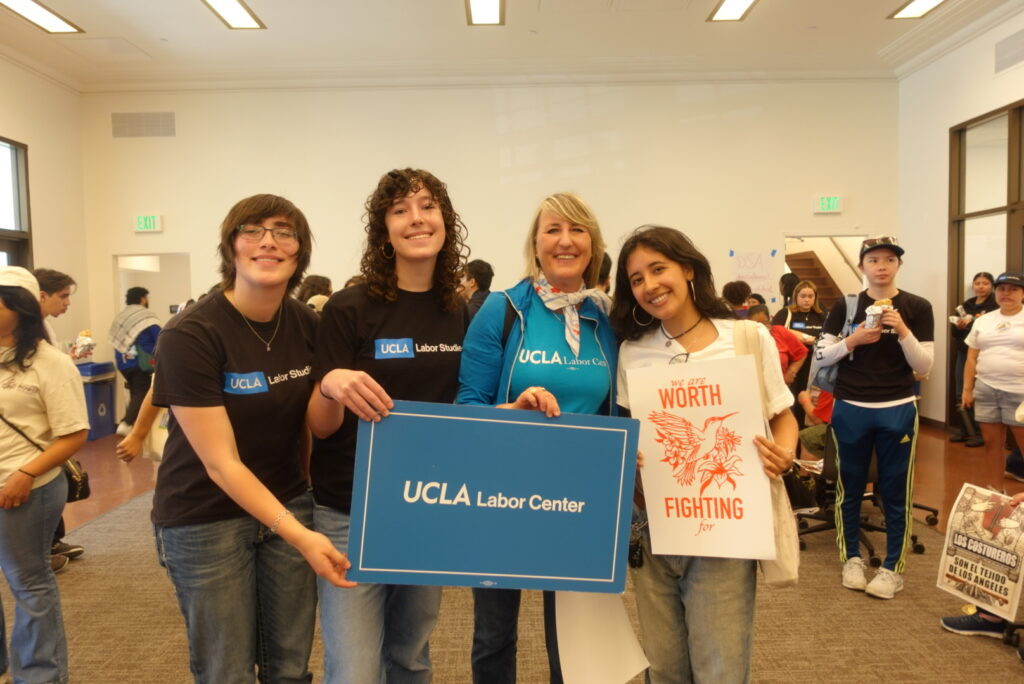
Overall, working with these amazing students alongside my incredible YWEP team helped me answer the question I kept returning to in every classroom experience: if I had learned about my rights at 16, I might have understood sooner that I belong to a vast network of young workers across the United States and around the world whose rights are worth fighting for. Seeing these students’ sheer brightness, resilience, and willingness to take one another seriously showed me that young workers already embody the courage and collective instinct needed to defend one another. What they deserve, then, is the education, support, and space to activate the amazing powers of collective unity within them.