One student’s journey from learning about labor rights to teaching them
By Hana Chekol
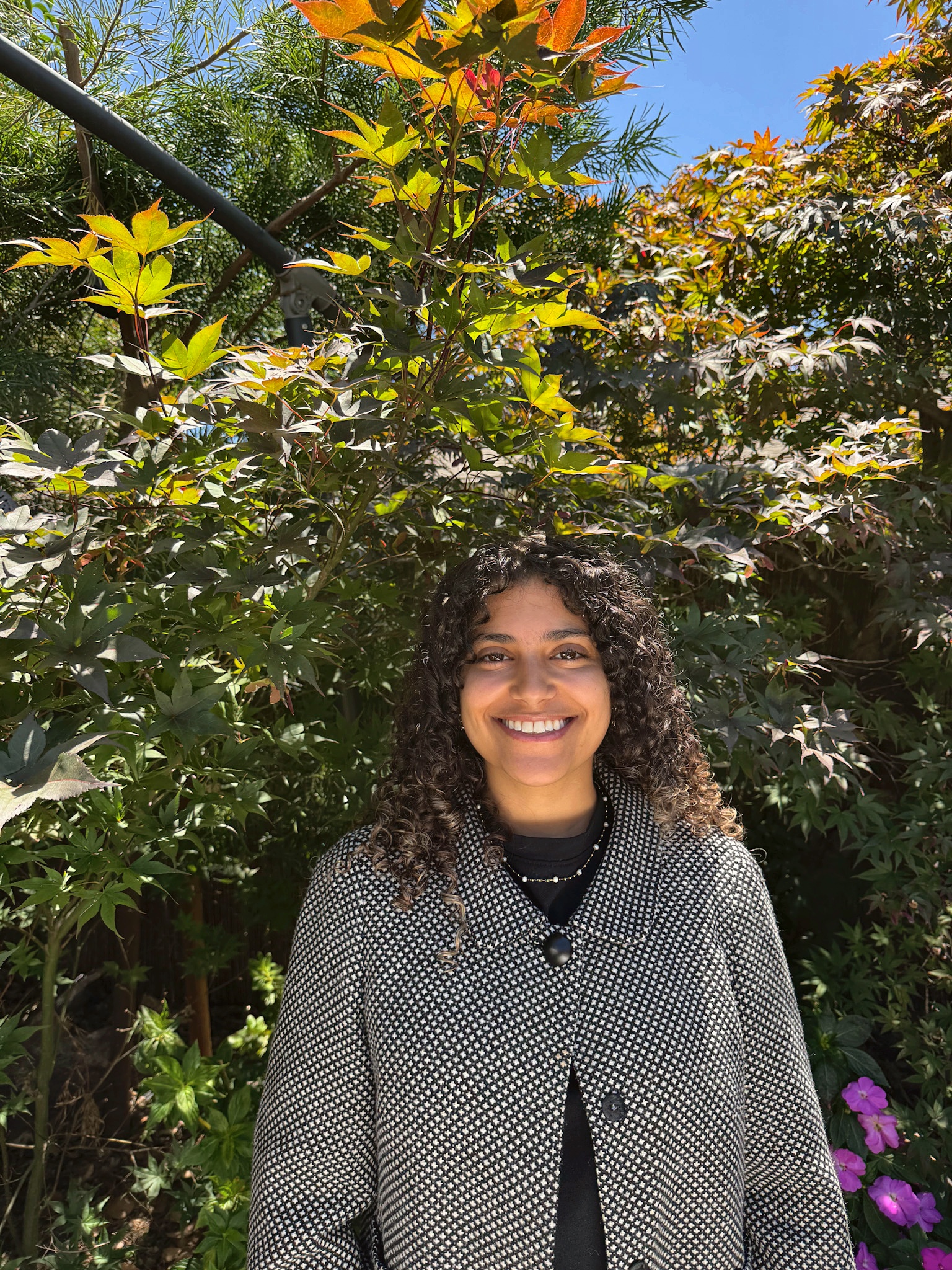
Hana Chekol became involved with the Young Worker Initiative through her Labor Studies class, “Working Families and Inequalities in Urban Education”. The course gave her the opportunity to lead worker education workshops for students across Los Angeles. Teaching students about their rights on the job has deepened her commitment to strengthening local communities, and she hopes to continue this work through a career in local politics.
By the time young people get their first paycheck, most have never been taught how to understand it. They don’t know why their take-home pay is smaller than expected, where all those deductions go, or what they are used for. Many young workers don’t know they are entitled to a 10-minute rest break for every 4 hours worked or a 30-minute lunch break halfway through their 8-hour shift.
The gap between workers’ rights on paper and what young workers can actually put into action is exactly what the UCLA Labor Center’s Young Worker Initiative: “Know Your Rights on the Job!”—a 4-module curriculum was designed to close. Through these educational opportunities, the Young Worker Initiative aims to bring participatory labor and workplace learning to college and public high school students through undergraduate student and community partner engagement. Recently, we collaborated with the Building Skills Partnership (BSP), a statewide program focused on supporting workers in low-wage industries, including janitorial, security, and airport workers and their families on workforce development, immigrant inclusion, and community advancement.
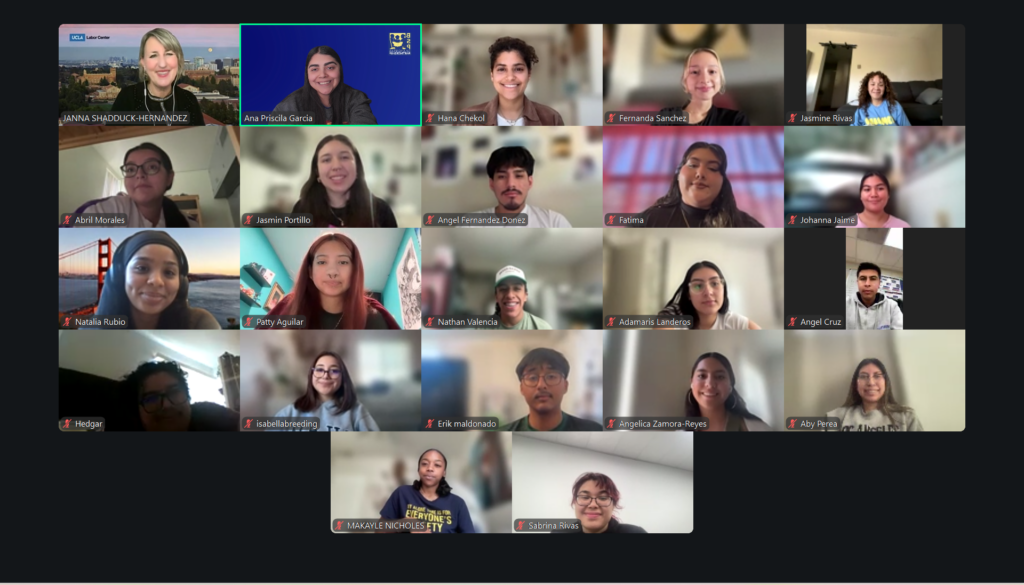
Through my UCLA Labor Studies 136M class, Professor Janna Shadduck-Hernández trained a group of students to become co-facilitators of this curriculum. Over four consecutive Saturdays, we worked with 18 college students who are the recipients of the 2025 BSP Scholarship Program. All of the college participants are the children of janitors, security officers, and airport workers affiliated with BSP and the SEIU-USWW union. In our workshops, we discussed students’ current work experiences, including their rights on the job and how to advocate for those rights, especially when those rights are violated.
The curriculum was developed by Dr. Shadduck-Hernández, Jazmin Rivera, and Abbie Cohen, educators with the UCLA Labor Center-Young Worker Initiative and students from previous Labor Studies 136M: Working Families and Educational Inequalities in Urban Schools classes. I worked alongside Dr. Shadduck-Hernández, Ana Priscila Garcia, the family and student engagement coordinator at BSP, and my UCLA student peers to deliver the programming.
The first module, “Know Your Worker Rights,” introduced students to essential California labor laws, including minimum wage, meal and rest breaks, overtime pay, and wage theft. We began by asking students about their own work experiences and then engaged them in a fun quiz to test their knowledge of the material, stopping throughout to further elaborate on the various laws.
In module two, “How Do I Read My Pay Stub?” walked students through a real pay stub, dissecting its various components. We discussed the different deductions like FICA, Medicare, and state and federal withholdings. We also talked about how that money goes back into their communities to support retirement and disability benefits and healthcare for the elderly.
The third module, “Advocate for Yourself in the Workplace,” taught students a 3-part checklist on how to stand up for themselves at work. They were then given a real-life scenario where they had to apply the 3 steps to work out a solution with their boss.
The final module, “What are Unions and Why are They Important?” began by introducing key terms related to unions and what understandings students had of them. Facilitators then went through the definitions for each of them. The lesson ended with a brief history of unions and how they have led to safer, more equitable working conditions.
As an instructor, what struck me most was hearing students’ stories of their rights not being upheld. Some students didn’t even realize that their rights had been violated until we talked about them in the workshops. Participants shared stories like their employer deducting money from their paychecks for their uniforms, which is illegal in California. Another expressed they were paid less than minimum wage because their boss considered them a “young worker.” The minimum wage applies to everyone regardless of age.
After our lesson on paychecks, participants expressed that they never knew what all of the different tax deductions on their paycheck meant. Many expressed frustration seeing their take-home pay compared to their net earnings, but after learning where their taxes were going, they said it reassured them to have that money going to things that can benefit their lives and communities.
As workers, we are often thrown into the workplace with little understanding of the conditions and pay we are entitled to. Teaching these workshops served as a critical reminder that this knowledge doesn’t just come naturally. Improving working conditions doesn’t stop at writing laws and policies; we have to make a conscious effort to incorporate them into people’s everyday knowledge.