By: Trinity Redoble
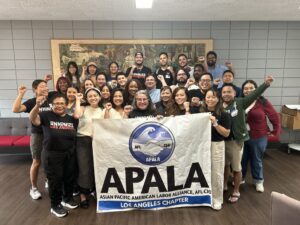
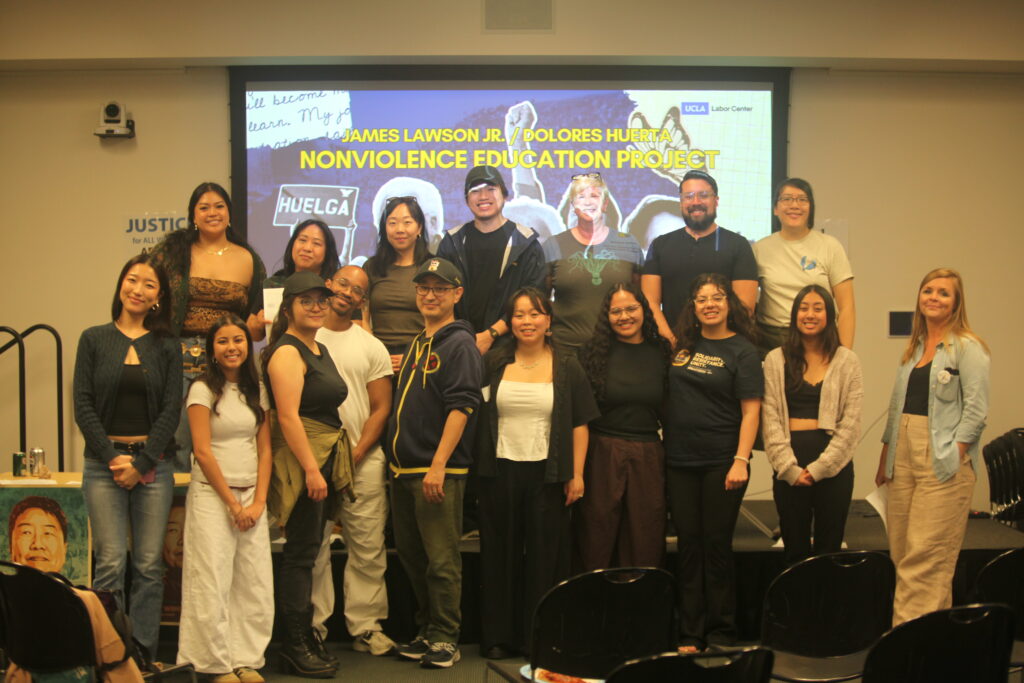
With unions and community organizations being called on to mobilize more urgently in defense of workers’ and immigrant rights, the UCLA Labor Center’s Asian American Racial Justice (AARJ) Project continues to expand its efforts in preparing activists for effective, principled action. On March 13, 2026, AARJ hosted its first nonviolent direct action training in partnership with the UCLA Labor Center’s Nonviolence Education Project (NVEP), the Asian Pacific American Labor Alliance Los Angeles Chapter (APALA LA), and IATSE TAG 839 (the Animation Guild), bringing together over 30 participants from various unions and community groups. Through this event, organizers aimed to increase the number of labor and community members equipped to participate in movements in ways that are strategic, grounded, and sustainable, even in moments of heightened tension or opposition.
The training began with a timeline activity, where participants reflected on their own histories by identifying when their families immigrated to the United States and when they first engaged in social action. This activity oriented the training around both personal and collective experiences, reinforcing the interconnectedness of individual stories and broader social movements.
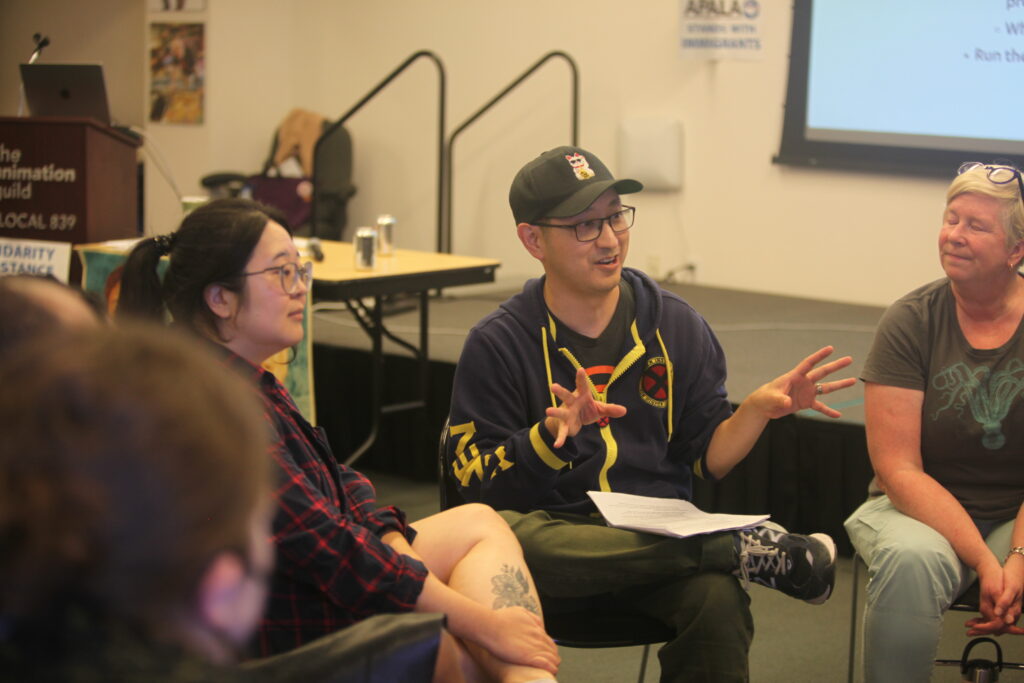
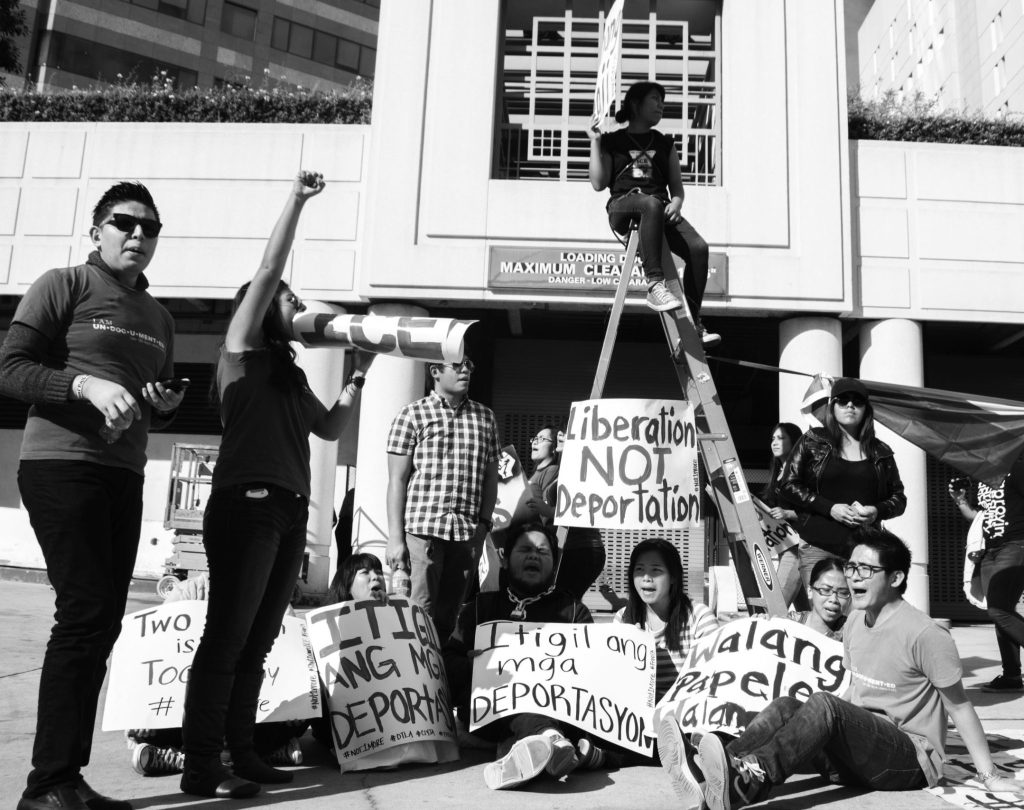
Throughout the workshop, participants explored the historical foundations of nonviolent organizing as practiced by civil rights leader Rev. James Lawson Jr. Facilitators drew connections to major movements such as the Civil Rights Movement, the Delano Grape Strike of the 1960s-70s, the Justice for Janitors campaigns in the 1990s, and more recent undocumented student movements. These examples highlighted how nonviolent organizing has consistently served as a powerful strategy for achieving systemic change.
In addition to historical context, the training emphasized practical skill-building through “real play” scenarios, a heightened version of roleplay exercises. These simulations placed participants in high-pressure situations that mirrored real-life protest conditions, allowing them to practice de-escalation techniques, maintain composure, and uphold nonviolent principles even in moments of conflict. Participants also engaged in breakout discussions within their respective affinity groups, where they developed strategies for bringing these lessons back to their own communities and organizations.
“I decided to attend this training because I recently joined APALA, and I think that nonviolence is very important,” said Leilani Cooki, a member of UFCW Local 770. “The most important takeaway was meeting everybody, learning how to deescalate situations, and knowing when to walk away. I’m hoping to bring this back to my union and continue building from there.”
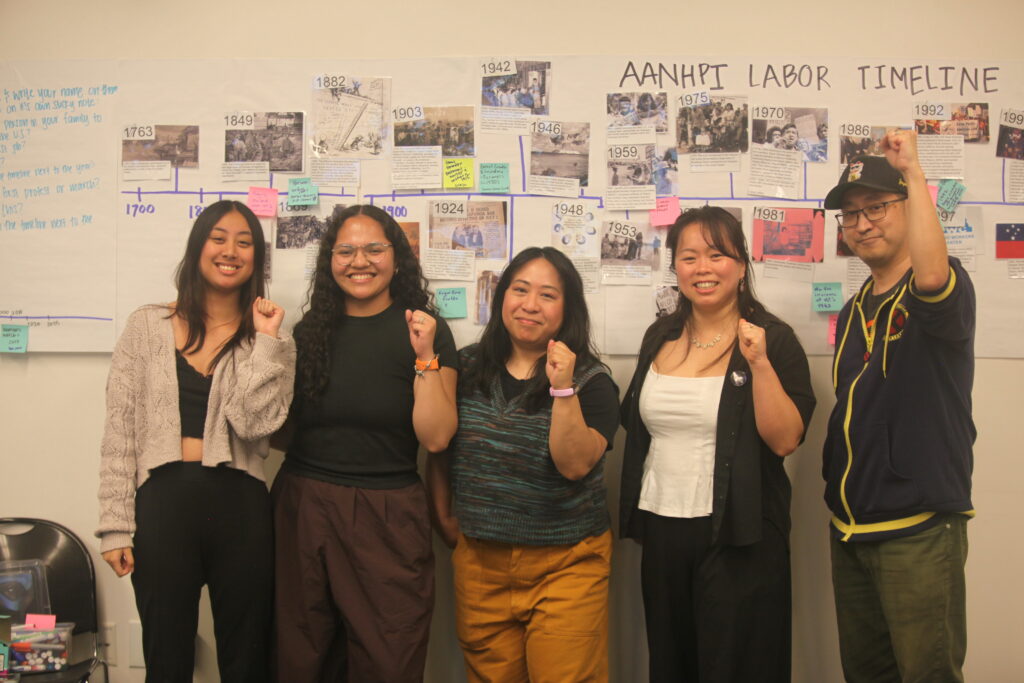
For many attendees, the training also served as a space to reflect on broader social and political contexts. Roger Oda, Vice President of the Animation Guild and board member of APALA Los Angeles, shared how his interest in nonviolence developed during moments of national crises. “During the pandemic and after events like the deaths of Tamir Rice and George Floyd, I found myself questioning what protest really does,” he said. “Nonviolence gave me an answer—it provided a framework that made sense of how collective action can actually create change.”
Oda also emphasized the importance of expanding this knowledge within labor space. “A lot of our members attend protests, but they aren’t always trained, and that raises concerns about safety,” he explained. “I’m hopeful we can begin bringing these trainings into the Animation Guild so that our members are better prepared.”
Similarly, facilitator Kathy Hoang, Senior California Campaign Manager for Powerswitch Action, highlighted the importance of community connection and ongoing engagement in this work. “This training reminded me how important it is to simply ask people to get involved,” she said. “One of my biggest takeaways was understanding how the principles of nonviolence can be actively practiced in real life, especially through the concept of militant nonviolent direct action. It’s critical to the strength of our movements.”
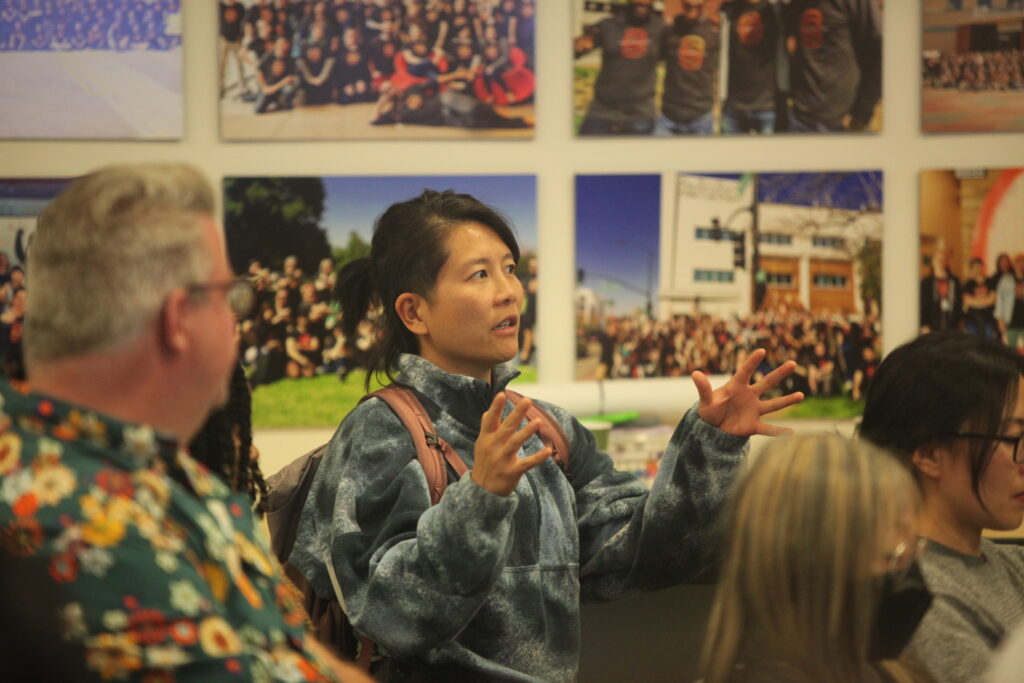
By the end of the training, participants left not only with new skills and strategies, but also with a stronger sense of community and shared purpose. AARJ’s nonviolent direct action training demonstrates that effective organizing is not just about showing up, but also about being prepared, intentional, and rooted in collective care.
As AARJ continues to expand these training, the goal remains clear: to empower communities with the knowledge, confidence, and tools needed to engage in direct action that is both impactful and sustainable.
This event was organized by the UCLA Labor Center’s Asian American Racial Justice Project team—Lisa Lei, Emmelle Israel, Sumin Kim, Chloe Serrano, Johnny Pham, and Trinity Redoble—in collaboration with APALA LA leaders Mary Entoma of Unite Here Local 11, Roger Oda of IATSE 839, and Emely Rauda from the UCLA Labor Center Nonviolent Education Project. Together, they helped create a space rooted in leadership development, community building, and collective action.
This event was possible thanks to the generous support from the W.K. Kellogg Foundation, the California Department of Social Services, and the Cathay Bank Foundation.