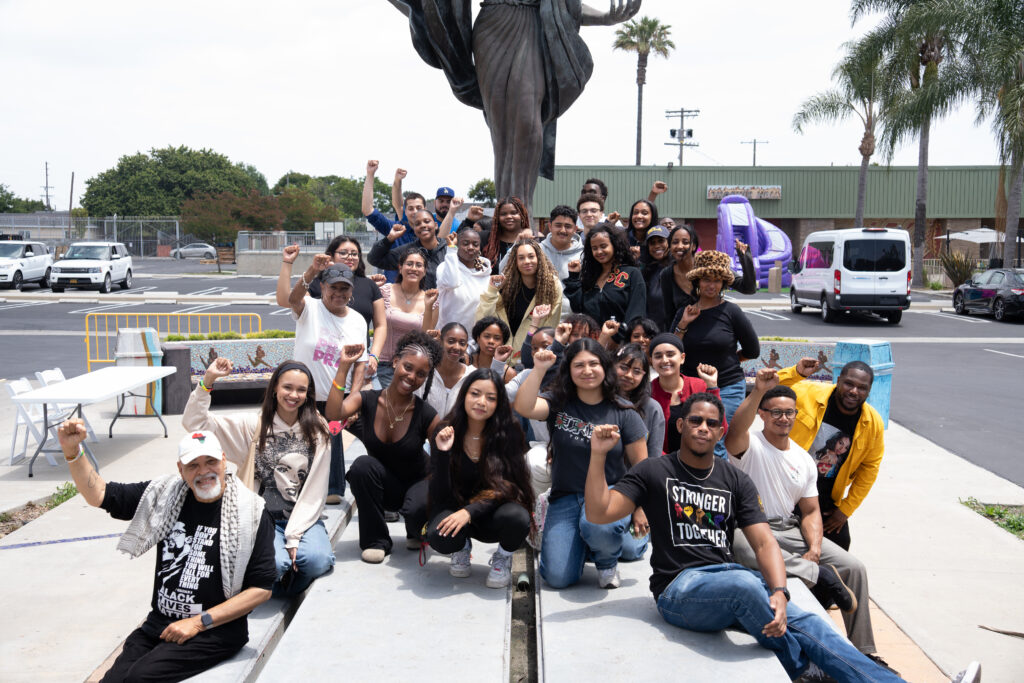
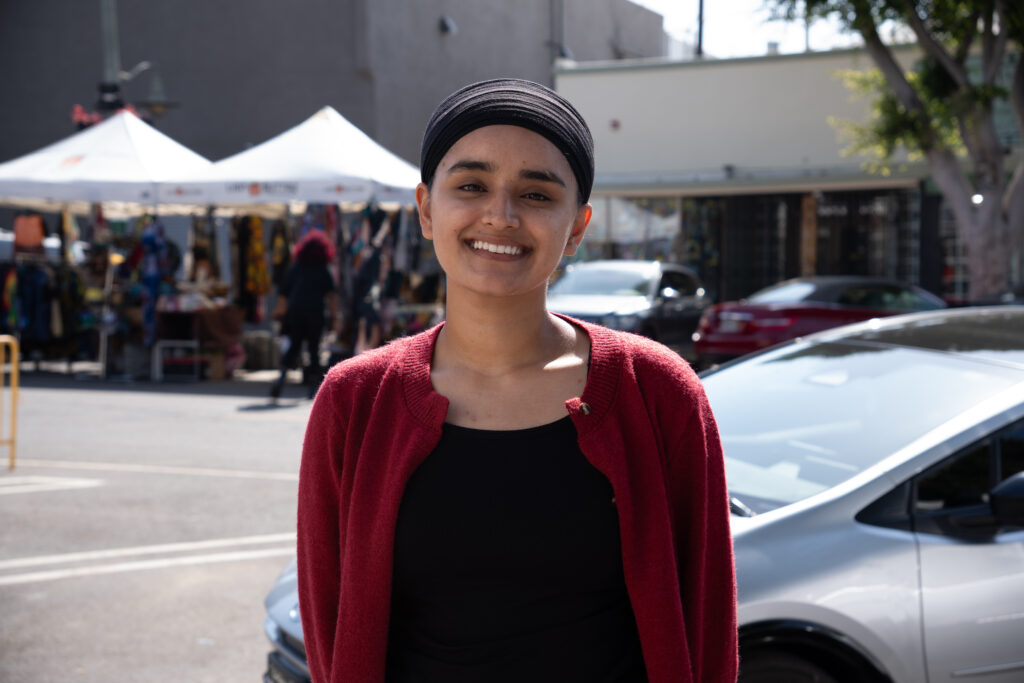
Meet Prabhleen Kaur (she/her), a Los Angeles native and recent UCLA graduate with a BA in political science and labor studies. During her senior year, Kaur engaged in learning about worker justice in the context of the Black labor history movement by enrolling in the Center for the Advancement of Racial Equity (CARE) at Work’s undergraduate course We Gone Be Alright: Developing the Next Generation of Organizers.
CARE at Work launched in 2019 with a mission to engage Black workers and economic justice advocates, and facilitate innovative solutions that address the needs of Black working class people. By utilizing a school-to-movement pathway of service, teaching, capacity building, and research, CARE at Work aims to illuminate conditions of Black work in Southern California under global racial capitalism and model approaches for change.
For students enrolled in the participatory and experiential We Gone Be Alright course, learning about Black worker justice provides an avenue for a lifetime of empowerment and connection with the social justice movement.
Below, Kaur dives deeper on her experience in CARE at Work’s undergraduate course.
How would you describe the We Gone Be Alright course to your friends and family?
I would describe this as a unique experience for students to learn about the history and impact of Black labor organizing. To learn how real world organizing and movement building occurs, we heard directly from labor organizers like Chris Smalls, explored research articles and studies on Black organizing, and engaged in discussions and hands-on experiences. This course is unique in its centering of Black voices and their impact on labor organizing as a whole.
What is your biggest lesson as a student in the We Gone Be Alright course?
This course was so eye-opening for me. Even though I make an active effort to do so, I realized that I, and many others, still do not know enough about Black history, Black organizing, and Black Los Angeles. There is so much learning I have to (and get to) do and that we as a society need to work towards. While learning about Black history in Los Angeles was very heavy and at times deeply saddening, it was also extremely uplifting to see so many organizations and community spaces created for supporting Black individuals and their dedication to their causes.
What was your favorite stop during the Black Historic LA bus tour?
The time we spent at the Watts Community Center was definitely the most impactful for me. Our tour guide was the most knowledgeable (and talented!) woman; her passion and love for this center and for Black organizing really shined and was so inspiring. All of the spaces they have created for the community were so beautiful and so intentional. Seeing all the exhibits in person solidified that we are not taught remotely enough about Black history in schools; the versions we are taught are watered down and meant to pacify the oppressors. Black organizing history is intentionally vilified and hidden to prevent further organizing and resistance. The slave ship exhibit was mindblowing. When we read or hear about slavery and slave ships, it feels almost incomprehensible but seeing this life size replica of a slave ship really drives home just how atrocious these crimes were.
Similarly, the historical museum was beyond impactful. Exhibits about slavery and racism during the Jim Crow era need to be highlighted because it shows just how dehumanizing these acts were. We cannot afford to brush this history under the rug and risk repeating it, or even worse, forgetting it like we are now. These exhibits should be required for all people to better understand the atrocities Black people have endured.
How can the We Gone Be Alright course benefit students in the long run?
This course has many benefits; it creates a safe, welcoming space to discuss Black labor and organizing history. Beyond that, students learn of various organizations that exist to support labor organizing and Black communities specifically. We learn how to build coalitions and use historical organizing efforts as lessons for our collective action efforts today. Ultimately, the course shapes students as active leaders regardless of what career path they chose to pursue. For students interested in labor organizing or nonprofit work, the course offers a paid internship opportunity, the Freedom Fellowship, where students can apply all the organizing skills they have learned.
Why is it important for students of all backgrounds to engage with the topics and perspectives explored in this course?
It is so beyond important for folks of all backgrounds to engage in these topics of labor rights, economic justice and community organizing especially from the lens of racial inequality because these issues affect us all. It is very important for us to learn from the lived experiences of Black workers and organizers and to center these voices. Better understanding of one another’s experiences supports coalition building across communities, paving the way for strengthened solidarity.